


- One partner, complete solutions
- International standards
- Bespoke design
- Premium quality
- Nationwide coverage
The scope
What Does Blockwork Include?
Blockwork is the stage that turns a concrete frame into rooms. Once the columns and slabs are cast, our crews close the bays between them in block or brick, divide every floor into rooms and build the walls around the plot, working from the architectural plans and the civil and structural works already standing.
External walls
The outer skin of the building, laid between the columns and up to the slab above, ready for render or cladding.
Internal partitions
Walls that divide each floor into rooms, corridors, bathrooms and kitchens, set out from the floor plans.
Lintels and openings
Concrete lintels over doors, windows and arches, with each opening sized to the joinery and aluminium schedules.
Tie beams and wall ties
Concrete bands in long or tall walls and steel ties into the columns, keeping the courses bonded to the frame.
Chases and sleeves
Routes cut or left in the walls for conduits, boxes, water pipes and drains, before plaster closes them over.
Boundary walls and parapets
Plot walls on their own footings, roof parapets, and the walls around tanks and service yards.
The works
Which Walls Does a Blockwork Contract Cover?
A blockwork contract usually brings together the eight works below, from the facade walls to the last partition in the basement. Most sit inside a new frame; a few, such as plinth walls or new rooms on an existing house, stand on their own. Every wall follows the architectural plans, with quality checks by our engineers throughout.

Facade and external walls
Block walls closing the frame of apartment buildings and offices, with openings left for windows and balconies.
Interior partitions
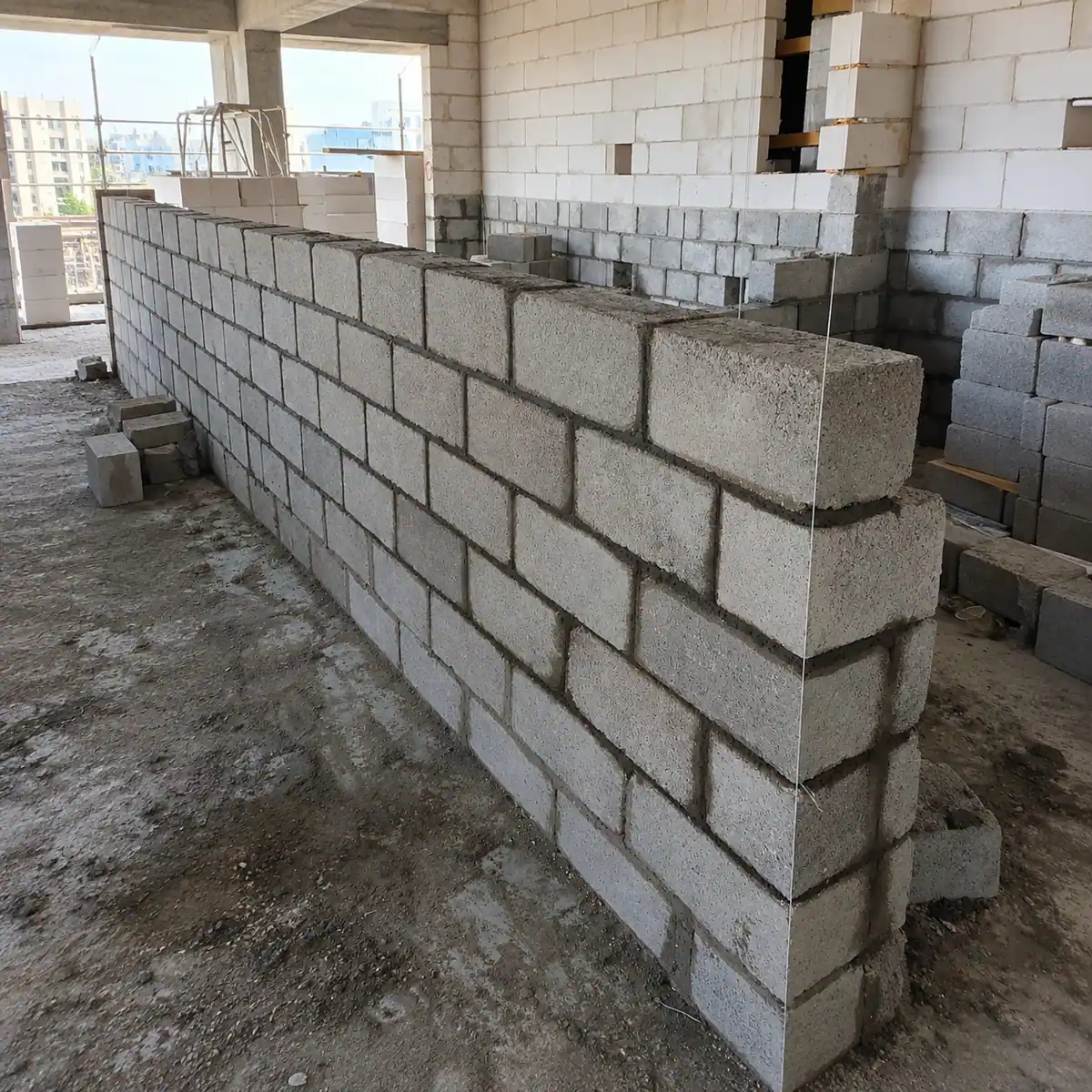
Room walls inside shops, offices and apartments, built straight and plumb so the finishes sit flat on them.

Infill around columns
Courses tied into the concrete columns, filling each bay of the frame up to the underside of the beam.
Door and window openings
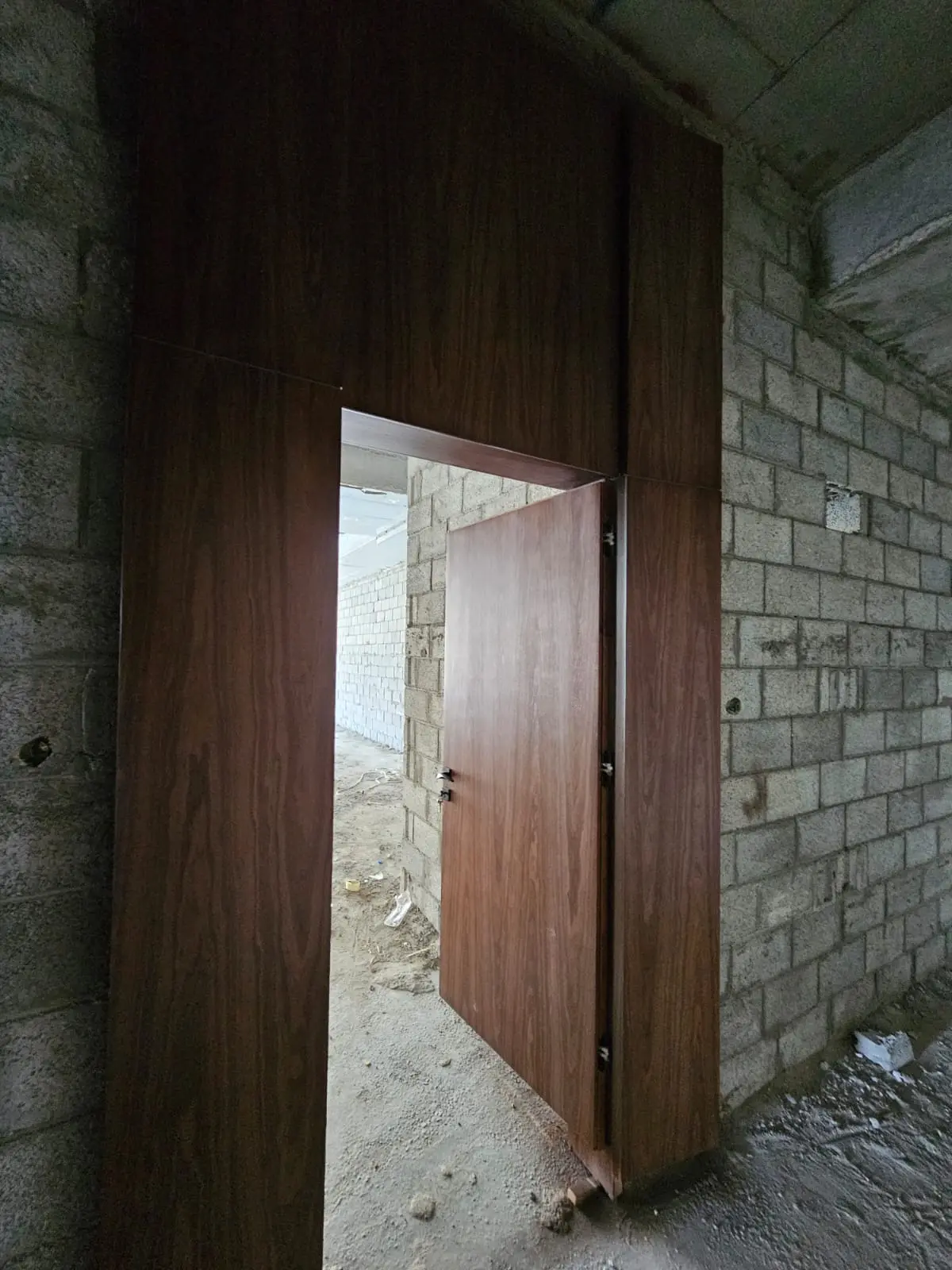
Openings sized to the joinery and aluminium schedules, with a lintel above and room left for each frame.

Walls prepared for services
Sleeves and chases for conduits, pipes and boxes, placed on the routes agreed with the MEP engineers.

Basement and plinth walls
Block walls below ground and around the foundations, coated against water before the ground is filled back.

Villa and house walls
Outer and inner walls of villas and houses, in cement block or red brick, from the ground floor to the roof.
Walls ready for plaster
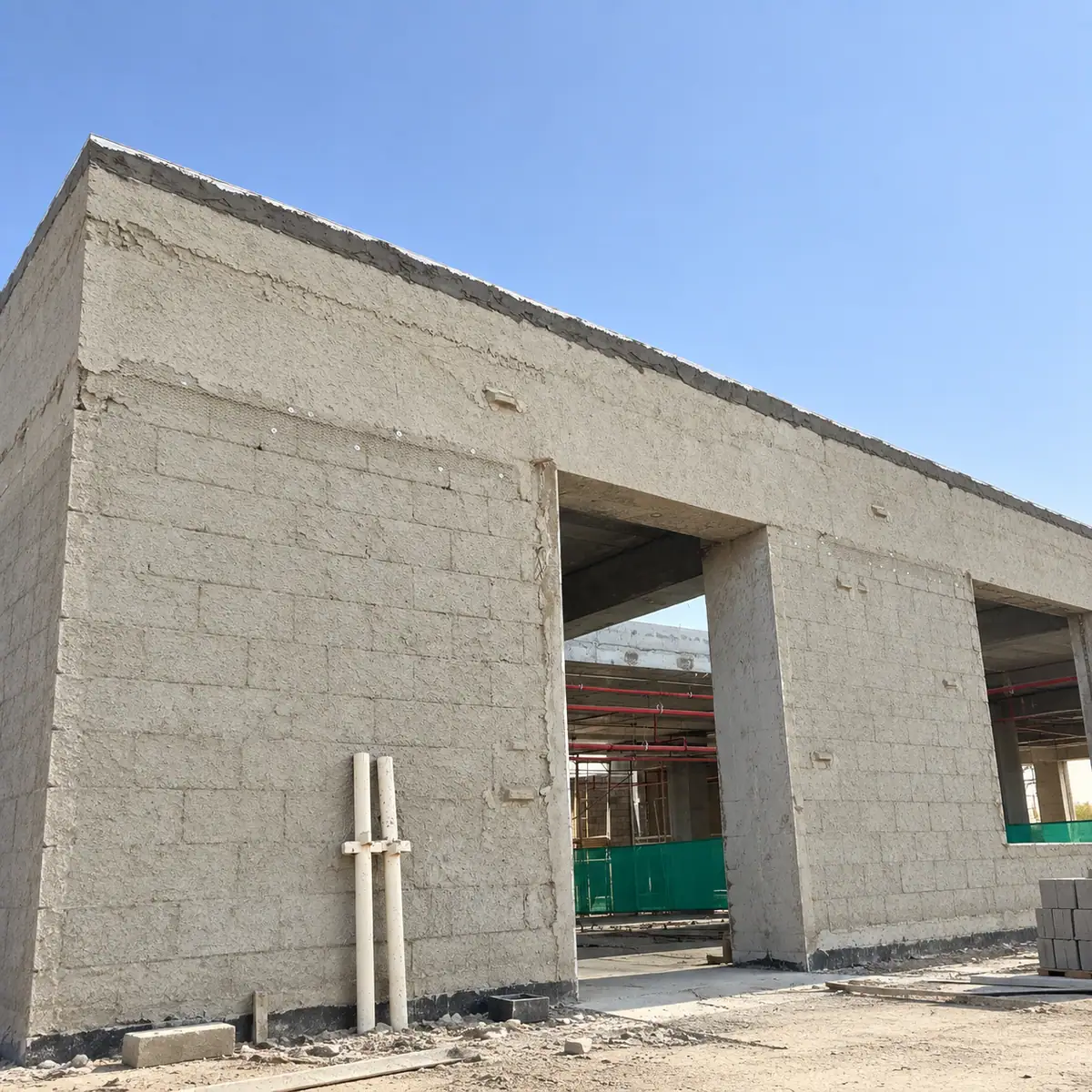
Finished walls with filled joints and clean faces, passed on to the plastering crews.
Block types
Which Block Suits Each Wall?
The block is chosen wall by wall: from the load it carries, the heat and noise it has to keep out, and the finish planned over it. In Syria most walls go up in hollow cement block, with red brick, white lightweight block and solid block used where the plans call for them, often several types in one building.
Hollow cement block
The usual block for outer walls and partitions in Syria: strong, quick to lay and easy to plaster.

White lightweight block
Lighter blocks that ease the load on the slabs and help keep heat out, and cut cleanly for chases and corners.

Red clay brick
Fired brick for villa walls, arches and curved facades, laid with tight joints under plaster or left on show.
Solid and insulated block
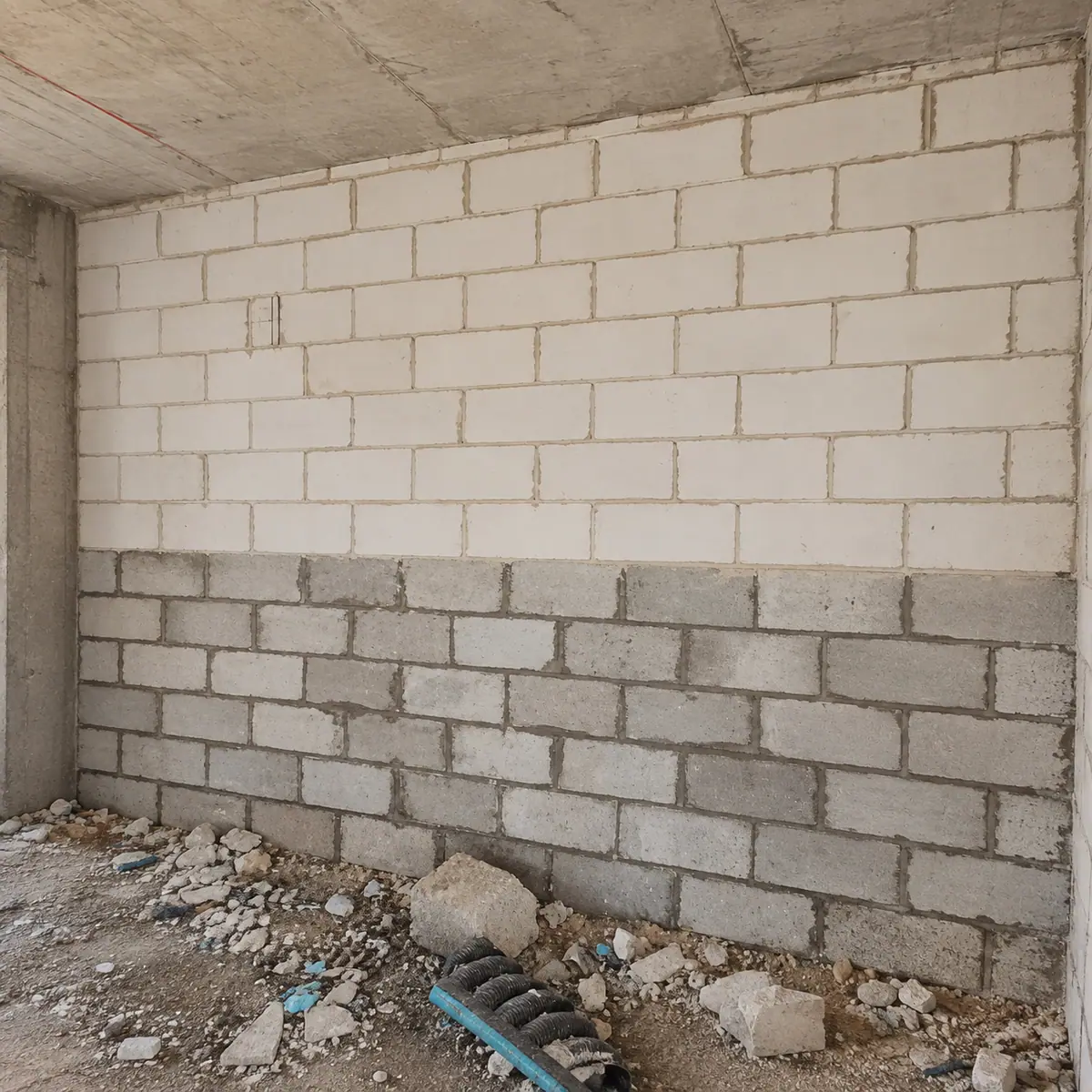
Solid courses for wet rooms and the foot of each wall, and blocks with an insulating core for outer walls. See waterproofing and insulation.
How it runs
How Does CALAPEX Build Your Walls, Step by Step?
Blockwork with us runs in six steps: the site visit, setting-out from the plans, the contract, the first course and the walls rising, then openings and chases, and handover for plaster. One project manager follows the bricklaying crews from the first chalk line on the slab to the last partition, and our engineers carry out quality checks throughout the works.

Site visit and plans
We visit the building, look at the frame, the slab levels and how materials reach each floor, and go through the plans with you.
Before workSetting-out
Wall lines, door positions and openings are marked on every slab from the plans, so you can walk the rooms before a block is laid.
Before workContract (permits on request)
The contract lists the walls, the block types and who supplies them. Should you need a building permit, our team prepares the file and follows the application.
Before workFirst course and walls
The first course is levelled on mortar, then the courses rise with staggered joints, tied into the columns as they go.
On siteOpenings, lintels and chases
Lintels are cast over doors and windows, tall walls get a tie beam, and the routes for services are cut before plaster.
On siteHandover for plaster
Joints are filled, the gaps under the slabs packed and the faces cleaned, then the walls pass to plaster, services and finishing.
Handover
Before the first course
What Should You Decide Before the Walls Go Up?
Walls are quick to build and slow to move. A few choices made with your architect before the masons start save cutting and rebuilding later, and let the plaster, tiles and joinery follow a layout that already suits the way you live. Our guide to the finishing stages shows what follows the walls.
Room layout
Walk the wall lines marked on the slab; moving a partition now means a new chalk line, not a demolished wall.
Door and window sizes
Settle the sizes of doors, windows and built-in wardrobes first, so each opening is built once to fit its frame.
Services in the walls
Agree where sockets, switches, taps and drains go, so the chases are cut in the right place before plaster.
Heat and sound
Choose where insulated outer walls, double walls or heavier blocks are worth having: bedrooms, plant rooms and walls facing the sun.
On site
Blockwork Gallery: From the First Course to Plaster-Ready Walls
Block walls closing concrete frames, interior partitions built around columns, red brick villa walls, basement walls sealed before backfilling, and finished blockwork handed over for plaster and render.
Projects
A Classical Palace, a Hillside Resort and a Limestone Office Building
Three projects in Syria whose walls take very different finishes: Private Palace Dimas, a domed palace with a Corinthian portico above formal gardens; Jasmina Hotel Resort in Wadi Qandil, near Latakia, sandstone pavilions stepping down a pine slope to a cove; and Office Kafr Sousa, an office building faced in ivory limestone with bronze glazing.


Owners and investors abroad
Can You Follow the Blockwork From Abroad?
Yes. From abroad, you can check your walls without flying in for each floor. We take you along the marked-out rooms on a video call before work starts, send photos and notes as each floor is closed in, and you approve changes remotely. Live Site Monitoring, on request, pairs a live camera feed with weekly photo reports.
Guide to building in Syria from abroadRooms shown by video
A video walk along the wall lines on each slab, with the plans beside you.
Photos as each floor closes
Photos and notes as the outer walls and partitions of every floor are finished.
Live Site Monitoring on request
A live camera feed plus weekly photo reports.
Before and after the walls
Who Plans the Walls, and Who Finishes Them?
Blockwork sits between the plans and the finishes. Before it, our architects place every wall, door and window on the drawings; after it, our fit-out teams plaster, tile and complete the rooms. If you would rather sign one contract for the whole route, design and build covers every stage, from the first sketch to handover.
Architecture
Floor plans and elevations that fix where each wall, door and window goes.
ArchitectureFit-out
Plaster, ceilings, floors, joinery, kitchens and bathrooms, completed against the finished walls.
Fit-outDesign and build
One contract covering design, structure, walls, services and fit-out.
Design and build
If we build it
Monitor Your Project, Live From Anywhere
On request, CALAPEX can install cameras on your site in Syria and give you a live view of the work, wherever you live. Weekly photo reports complete the picture, so you can watch your design take shape without travelling.
Private, secure access
Live camera feed
Weekly photo reports
Why we offer it
Distance should not mean less quality or trust. Seeing your site keeps our teams accountable and lets you follow every stage of the work.


Why CALAPEX
Why Owners Choose CALAPEX for Blockwork
Because the architects who place your walls, the masons who build them and the teams who plaster and finish them all work for one company. Our bricklaying crews build with the services, joinery and finishes that follow already in mind, with a single project manager as your contact for every wall.
One Partner, Complete Solutions
One company can take on the structure, blockwork, services, plaster and fit-out in a single contract.
International Standards
Walls built plumb, level and bonded to the frame, following international practice and your architectural plans.
Tailored Design
Each wall follows your layout: room sizes, openings and built-in furniture are settled before the first course.
Premium Quality
Quality blocks, mortar and lintels, with quality checks throughout the works.
Nationwide Coverage
From Damascus, our blockwork crews also build in Rif Dimashq, Homs, Aleppo, Lattakia, Tartous and Idlib.
Areas we serve
Where Do Our Bricklaying Crews Work in Syria?
Our bricklaying and blockwork crews are busy in Damascus and Rif Dimashq: Mezzeh, Malki, Dummar, Qudsaya, Yaafour, Al-Sabboura and the districts nearby. Further afield, they build in Idlib, Tartous, Lattakia, Homs and Aleppo. Clients abroad can settle the plans with our designers online; the walls themselves are built on site in Syria by our own teams.
Governorate14 areas
Damascus
Design, fit-out and construction across the capital, from Al-Malki and Abu Rummaneh to Old Damascus and Mezzeh.
Governorate15 areas
Damascus Countryside
Villas, chalets and family homes from Yaafour and Al-Sabboura to Bloudan, Al-Zabadani and Sahnaya.
Governorate
Homs
Design, fit-out and construction across Homs governorate, managed by our team in Damascus.
Start a project in HomsGovernorate
Lattakia
Design, fit-out and construction across Lattakia governorate, managed by our team in Damascus.
Start a project in LattakiaGovernorate
Tartous
Design, fit-out and construction across Tartous governorate, managed by our team in Damascus.
Start a project in TartousGovernorate
Aleppo
Design, fit-out and construction across Aleppo governorate, managed by our team in Damascus.
Start a project in AleppoGovernorate
Idlib
Design, fit-out and construction across Idlib governorate, managed by our team in Damascus.
Start a project in IdlibWhere our site teams work
Clients Abroad (Design Only)
Saudi Arabia
Gulf
Qatar
Gulf
UAE
Gulf
Kuwait
Gulf
Oman
Gulf
Bahrain
Gulf
United States
North America
UK
Europe
Switzerland
Europe
Australia
Oceania
Canada
North America
New Zealand
Oceania
Our partners
Businesses That Trust CALAPEX

Basmah Alkhaleej Contracting

Corvect Consulting

Decortaj Design & Architecture

Enerstead Solutions

Glam & Smile Clinic

Granada Hotel

Jasmina Hotel Resort

Medentalia Clinics

Mirror Mug Cafe

Mundo Sabore Restaurant

Or & Soie Apparel

Safiah Food Logistics

Satin Céleste Beauty Spa

Stone Cast Contracting

Sun & Shadow Cafe

Ultraiconic Digital Agency

Yarda Decoration Creators
Frequently Asked Questions About Blockwork
Bricklaying covers every wall that is not part of the concrete frame: external walls, internal partitions, parapets and boundary walls. On a CALAPEX site it includes setting out the wall lines, laying block or brick in mortar, tying the courses into the columns, casting lintels and leaving chases for services, then handing over walls ready for plaster.
The structure is the concrete frame of foundations, columns, beams and slabs that carries the building. Blockwork fills that frame with walls that divide and enclose the spaces but carry little load themselves. That is why block walls go up after the slabs are cast, and before plaster, services and the other finishing trades begin.
Most walls in Syria are built in hollow cement block, with thicker blocks outside and thinner ones for partitions. Red brick suits villas and arches, white lightweight block eases the load on the slabs, and solid or insulated blocks serve wet rooms and outer walls. Your architect and our engineers choose the block for each wall.
Who supplies the materials is written into the contract. CALAPEX can take on the blockwork with the materials, covering the blocks, cement, sand and lintel steel, or build with materials you bring to site. Either way, the block types follow the plans agreed with your architect, and our engineers look over the materials on site before the masons use them.
Where a wall meets a column, steel ties or mesh are set into the mortar joints so the courses stay bonded to the frame. Long or tall walls also get a concrete tie beam halfway up, and the narrow gap left under each slab is packed once the wall has settled, which helps limit cracks along that line.
Yes. Before plaster, our teams cut chases or leave sleeves for electrical conduits, sockets, switches, water pipes and drains, following the routes agreed with the MEP engineers. The plumbing and electrical work then goes into the walls, and the chases are filled before plastering, so pipes and cables end up hidden behind a flat finish.
Yes. Our crews build block walls around plots on their own footings, and add rooms, parapets or new partitions to existing houses and apartments. In an existing building our engineers first look at the slab or the ground the new wall will stand on, and each case is agreed with you once the site has been surveyed.
Once the joints are filled and the faces cleaned, the walls pass to the next trades: services are fixed into the chases, then plaster or render covers the block inside and out. After that come insulation or cladding where planned, tiling, gypsum work and painting, all of which CALAPEX can carry out under the same contract.
Yes. Before the masons start, we walk you along the wall lines over video, then share photos and notes as each floor of walls is finished, so changes can be agreed remotely. With Live Site Monitoring on request, you can also watch the site through a live camera feed, backed by weekly photo reports.
CALAPEX offers bricklaying and blockwork across Damascus and Rif Dimashq, including Mezzeh, Malki, Qudsaya, Yaafour and Al-Sabboura, and also builds walls in Idlib, Tartous, Lattakia, Homs and Aleppo. The walls are built only inside Syria; clients living abroad can settle the plans online with our design team and follow the site remotely.

Book a Blockwork Consultation
Tell us about the building: where it is, whether the frame is finished and how many floors need walls. Send the plans or a few site photos through the form, and we will call you on video or visit the site in Syria.
Prefer to talk?+963 965 535 363